




























RD Escapement: Best Exhaust, Performance & Fitment Guide

When I say RD exhaust (escapamento RD), or what many riders call the RD Escapement, I am not just talking about the pipe that makes that unique two-stroke sound. On a Yamaha RD, the exhaust is very much linked to the running of the engine. The throttle response, the usable RPM range, the sound and the complete riding experience are all worse off.
I understand the temptation. You buy a stock RD 135, bolt on a performance exhaust, and suddenly expect the bike to feel a whole lot different. It does, sometimes. But here’s the thing. The exhaust, carb, intake, fuel mixture and engine tuning all have to be correct together. Change one without taking the other two into account, and you might be dissatisfied.
So with any RD Escapement, I prefer to look at the whole thing. Stock, sport, or expansion chamber exhaust? RD 125 or RD 135? Greater sound or greater power? What you do will depend on the bike and, more importantly, what you really want out of it.
What Is Escapamento RD and How It Works?
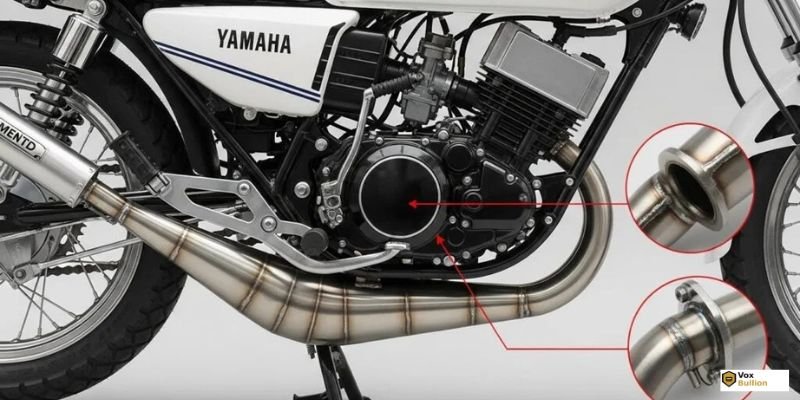
An escapamento RD, or RD Escapement, basically helps remove exhaust gases from the engine. Pretty simple, right? Well, not quite. The exhaust system is a lot more than an outlet pipe with a two-stroke Yamaha RD engine.
A well-built 2-stroke exhaust takes advantage of the pressure waves formed when the gases leave the cylinder. This is when the expansion chamber comes into play. Its shape, length, diameter and internal design can alter how those pressure waves behave.
In practical terms, the exhaust can affect where in the RPM range the engine feels strongest. So I never assess an RD Escapement on its aesthetics alone. A big chamber and beautiful silencer appear great in photographs, but solid engineering is more important than polished metal. And a badly matched pipe can be a real noise maker and not give the performance you desire, absolutely.
Original, Sport or Expansion-Chamber RD Exhaust?
What is the best RD exhaust? First question: what do you want to do with the bike?
In the case of a restoration project, I would pick an original RD Escapement or a top-quality replacement which is close to the factory setup. It is important to be original, especially on a classic motorcycle.
A sport exhaust is often popular with riders for a beefier exhaust note, alternative design or a change in engine character. Then there’s the expansion chamber or tuned exhaust. This type is built around the characteristics of a two-stroke engine and may vary the way power is supplied over the RPM range. Custom-manufactured systems can also be purchased. Some are well engineered. The others just look mean.
Personally, I’d be leery of good welds alone. I would like to know what motor and riding circumstances the pipe was actually made for. Sometimes a too-aggressive set-up for everyday riding can be more of a pain than a thrill.
RD 135 Exhaust vs RD 125 Exhaust: Is There A Difference?
Yes. One error I see often is thinking that two RD exhaust systems are interchangeable because they appear identical.
I wouldn’t chance that. Check out the RD 135 exhaust and see what model and year it was made for. Mounting points, header size, brackets, clearances, gaskets and overall geometry may all be important. The same logic applies to the RD 125.
Just because you can physically fit a new exhaust doesn’t mean it is a suitable match for the engine. Note: The size of a two-stroke expansion chamber affects engine characteristics.
If I were buying a used exhaust on the internet, I would ask for close-up photos of the header connection, mounting brackets, chamber, silencer and welds. I’d also check the actual bike it came from. A cheap exhaust isn’t a deal for long when you have to cut, weld, bend, and modify everything simply to get it installed.
Escapamento RD Original versus Performance
It would depend on what the motorcycle is used for. If I had a pristine Yamaha RD with most of the factory parts still on it, I’d probably leave the stock exhaust. Something is rewarding about keeping the spirit of an older bike instead of changing every aspect just because you can.
Now picture a different scenario. You have an RD that’s already a weekend project. Engine arrangement is different, originality is not a consideration, and you want a more performance-focused riding experience. In such an instance, a smartly constructed performance or tuned exhaust becomes that much more interesting.
One thing to remember is that louder doesn’t mean faster. Seems basic, but surprisingly easy to forget when you hear a screaming two-stroke. I prioritize originality in restoration. I’d look at the whole engine setup for performance. And if your sole aim is to wake up the neighborhood at 6 a.m.? Perhaps think a little harder about that performance aim.
Can a Tuned RD Exhaust Really Improve Performance?
Yes, it does. But I’d be cautious of miracle claims. The expansion chamber of a two-stroke engine is developed on the basis of pressure-wave behavior. Changing its dimensions can change where the engine delivers its strongest response.
Thus, a correctly built RD Escapement can boost performance in a given RPM range. Depending on the setup, the bike may feel stronger in the upper RPM range or deliver power differently than the initial setup.
But it’s a big difference between stating an exhaust can boost performance and saying every pipe contributes X horsepower. Performance is a function of the full configuration. It could be the carburetor, the jetting, the air intake, the ignition, the condition of the engine, the cylinder arrangement or the exhaust.
It is like giving professional running shoes to someone who never trains. Great shoes can help, but they don’t turn an athlete into a magician. Same here. A good exhaust is preferable if it is supported by the rest of the engine.
Why Does the RD Sound So Different?
Let’s face it, the sound is part of the allure of owning an RD. A good two-stroke has a personality that is easily distinguishable from anything else.
The stock exhaust normally offers you a sound closer to the bike’s original nature. The exhaust note can be made sharper, louder or more aggressive depending on the design of the chamber and silencer in the sport or expansion-chamber system.
But I always discern good sound from too much noise. I recall seeing a rider get real excited hearing his performance exhaust that was just installed for the first time. It was a great big smile. After a longer ride, however, the continuous volume was not nearly so appealing. That’s a real-world consideration people sometimes forget.
There are also legal difficulties. The noise and motorcycle modification restrictions are different depending on where you’re riding the bike, so I’d always verify the current local requirements before using a modified RD Escapamento on public roads. The loudest pipe on YouTube is not automatically the best pipe for your motorcycle.
How to Pick the Right Escapamento RD
The greatest escapamento RD, in my opinion, is the one that fits the bike well and matches how the owner truly plans to ride it.
Start with your objective. Are you tuning up the bike? Building a weekend machine? Regular rider? Want a different sound? Want greater performance?
Once you know that, I’d inspect the model and year, mounting locations, header size, build quality, material, chamber design, silencer and company reputation.
With a used RD Escapement, look closely for:
- cuts or crushed areas.
- corrosion and rust.
- welds that are damaged or mended.
- broken bracket mountings.
- earlier alterations.
- signs of exhaust leaks.
I would also question the availability of replacement parts for the silencer or mounting hardware.
And beware of extravagant horsepower boasts. If a seller claims huge performance gain but gives no info on engine configuration or testing, I’d keep my wallet shut. Good performance statements need context.
How to Install & Tune an RD Exhaust Properly
Installing an RD Escapement can seem like a straightforward remove-and-replace job. Sometimes it is. Sometimes that’s where the adventure starts. Before I install it, I would check the exhaust port connection, gasket, brackets, mounting hardware and clearances around it. There should be no need to shove anything into place.
Once it’s installed, I’d double-inspect for exhaust leaks and odd vibration. And then there’s the tuning bit that nobody talks about: A large exhaust alteration can change the character of a two-stroke engine. Ensure the engine is running well with the new setup; you may need to check the carburetor and fuel mixture.
I would never just start switching jets at random because someone on a forum stated, ‘this size worked fine on mine’. Your RD is not always their RD.
If the bike starts running poorly, gets hot, is running hot, hesitates,s or just feels different after adding the exhaust, I would get the whole system checked out by someone who knows 2-stroke engines. Surprisingly rapidly, guesswork can get surprisingly pricey.
Common RD Exhaust Problems & Service
Many Yamaha RD motorcycles have already lived lengthy lives, so it is worth looking at the state of the exhaust. Rust is an apparent worry, especially with older steel systems. I would also check for broken brackets, leaking joints, broken welds, dents, loose hardware and strange sensations.
Another concern with a two-stroke exhaust is carbon build-up. Over time, there may be deposits in the system that may impede the flow of gas. That doesn’t mean I’d go right to the harshest chemical cleaner I could find on an old exhaust.
Start with an inspection. Check joints for symptoms of leaking. Hear rattles again. Look out for unexpected shifts in the exhaust note. Check the chamber for corrosion or physical damage, and check mounting bolts.
Some original systems are worth restoring rather than replacing, especially where originality counts. Maintenance is the not-fun part of having an RD. I know. But it’s a lot more fun to inspect a bolt today than to watch part of your exhaust try to flee your motorcycle tomorrow.
How much does an Escapamento RD cost and where can I buy one?
I wouldn’t assign one price for an RD Escapement. The market is too varied. Price varies by model, manufacturer, condition, construction, rarity and whether you are buying an original, reproduction, sport, custom or expansion-chamber system. The price of a new performance pipe versus an original used exhaust can be considerably different. And when original parts are scarce, restored parts may have a price.
If buying used, I would ask for extensive photos and specifically ask about internal corrosion, dents, past repairs, mounting damage and customizations.
If I were buying a new exhaust, I’d look at the manufacturer’s reputation, stated compatibility, warranty, materials used and availability of replacement parts.
And don’t overlook the hidden expenditures. You may have to replace gaskets, new mounting hardware, work on installation or carburetor adjustments. A $100 exhaust that requires $200 in mods isn’t actually a $100 exhaust. Sometimes it is cheaper to buy the right part once than to buy the wrong part twice.
Also Read About: Babeltee: Everything You Need to Know About This Modern Tea Concept
Is it worth changing the exhaust of the RD?
Yes. If it’s the right bike and the right reason. If I were repairing an RD, I would try to keep the original set-up. If I were creating a performance-oriented project, I would carefully consider a well-constructed, tuned exhaust that complements the engine arrangement.
I wouldn’t choose an exhaust just because it makes the bike louder. The muffler on an RD Escapement is attached to a much bigger system. Exhaust flow, expansion-chamber design, carburetion, air-fuel combination, engine rpm, ignition and the general mechanical condition all affect the way the motorcycle operates. In fact, it is this interaction that makes two-stroke motorcycles so intriguing.
A relatively simple adjustment can affect the character of the machine rather substantially. So choose according to your aim, make sure it’s compatible, install everything well and watch how the engine reacts. The finest RD exhaust isn’t always the biggest, baddest or most expensive pipe. It’s the one that makes sense for your RD.
Frequently Asked Questions
What is the finest exhaust for an RD135?
No perfect answer. I’d like the restoration to have an original or factory-type system. A well built tuned or expanded chamber exhaust could be a better fit for a performance project. Fitment, build quality, and compatibility should come before sound or appearance. A well-tuned RD exhaust will enhance horsepower.
It can increase engine performance in some RPM ranges, but I would not accept a fixed HP promise without testing. Generally, a blend of exhaust design, carburation, intake, ignition, engine condition and other modifications.
Will I need to mess with the carb when I swap exhaust?
Perhaps. Exhaust modification can have a great effect on two-stroke engines. If you see hesitation, odd heat, bad response, etc. after installation, get the carb and general engine setup checked; don’t just change jets at random.
When I change the exhaust, do I have to tune the carb?
Perhaps. Exhaust modification can have a great effect on two-stroke engines. If you see hesitation, odd heat, bad response, etc. after installation, get the carb and general engine setup checked; don’t just change jets at random.
RD exhaust blowing oil, why?
You should expect to see some oil residue, as oil is used to lubricate two-stroke engines. An over-rich combination, heavy smoke or dirty running may call for a closer examination of the fuel mixture, lubrication system, engine condition or riding habit.
Can I fit any RD 135 exhaust to my motorcycle?
I wouldn’t think so. Make sure you buy the exact brand, year, exhaust-port fitting, mounting brackets, dimensions and application. Two exhausts may appear nearly identical in photos, but have quite different fitments or internal designs.
View More: voxbullion.com